

From Detention to Supply
The New Economics of Stormwater Harvesting

By Shawn Crawford
ARCSA Board of Director
For decades, stormwater has been viewed as a problem to manage. Engineers designed detention ponds, underground vaults, and drainage infrastructure with one primary goal: move water away from buildings and sites as efficiently as possible. Today, that perspective is changing.
As communities face growing pressures from population growth, aging infrastructure, drought concerns, and increasing water demand from center industry growth and developmental growth, stormwater is increasingly being recognized as an untapped water resource. Across the country, municipalities, developers, and facility owners are beginning to ask a different question:
What if stormwater isn't a liability? What if it's an asset?
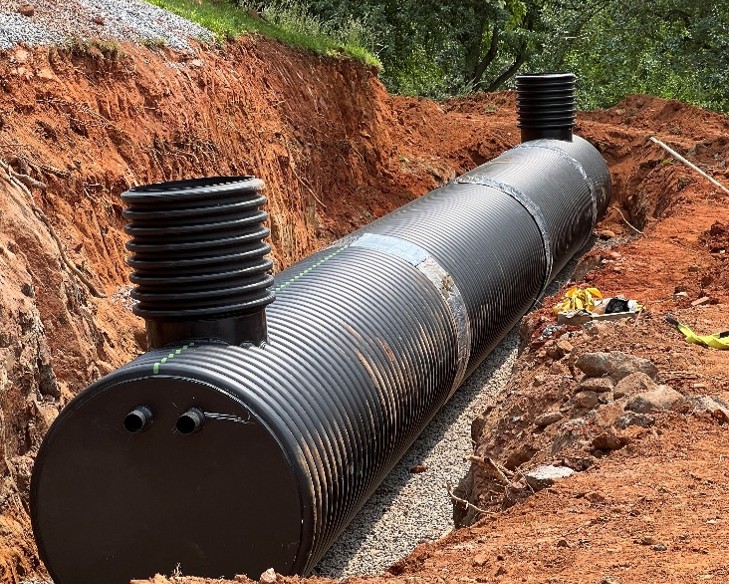
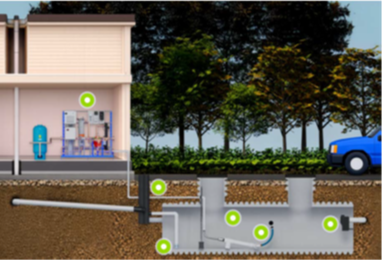
Recent federal investments reflect this shift. The U.S. Environmental Protection Agency (EPA) continues to support stormwater reuse and management through dedicated funding programs that help communities develop infrastructure capable of capturing, storing, treating, and reusing stormwater. These efforts signal a broader movement toward viewing stormwater as part of the nation's water supply strategy rather than simply a runoff control challenge. [epa.gov], [scsengineers.com]
The Traditional Approach
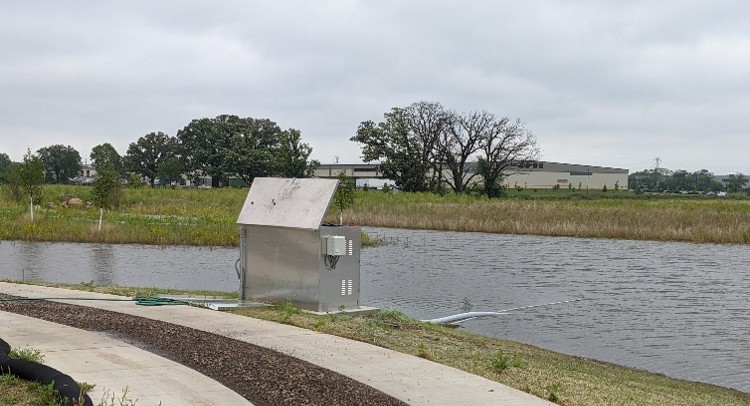
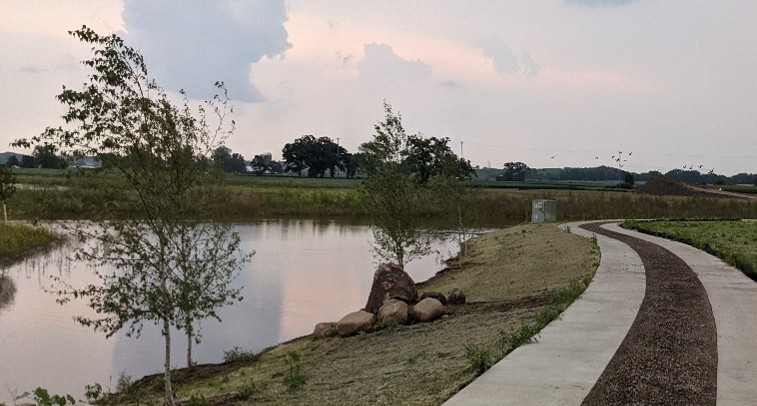
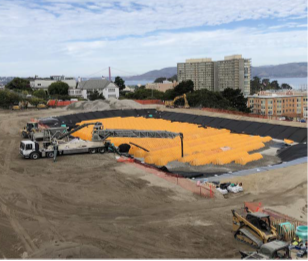
Historically, site development has focused on compliance. Stormwater detention systems were designed to satisfy regulatory requirements by slowing runoff and protecting downstream waterways and infrastructure.
While these systems remain important, they often represent a significant capital investment that provides little direct return to the property owner. Once installed, detention infrastructure typically strives to meet regulatory requirements like, water quality runoff requirements and flood mitigation requirements.
At the same time, many facilities continue purchasing large volumes of potable water for irrigation, cooling towers, toilet flushing, and other non-potable applications.
The result is an interesting contradiction. Sites spend money to dispose of stormwater while simultaneously paying for imported water.
The Emerging Opportunity
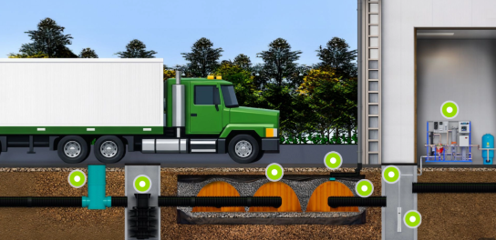
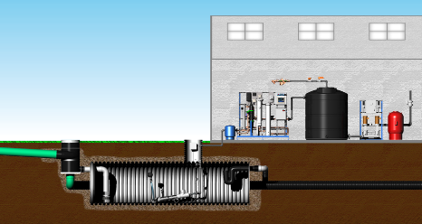
Stormwater harvesting changes the equation. Rather than treating runoff as waste, stormwater harvesting systems capture rainfall from rooftops, parking areas, and other impervious surfaces, then store and treat that water for beneficial reuse. Depending on local regulations and project goals, harvested stormwater can supplement irrigation systems, cooling towers, industrial processes, groundwater recharge programs, and other non-potable demands. [jmpcoblog.com]
This transforms stormwater infrastructure from a cost center into a productive asset.
In many cases, developers are discovering that infrastructure already required for stormwater compliance can be leveraged to provide long-term operational value.
Economics Are Driving Adoption
The growing interest in stormwater harvesting is not being driven solely by sustainability goals. Economics are becoming a powerful motivator.
Several factors are converging:
- Rising municipal water rates
- Increasing development density
- Water supply constraints in growing regions
- More aggressive sustainability requirements from investors and tenants
- Growing concern about drought resilience and operational continuity

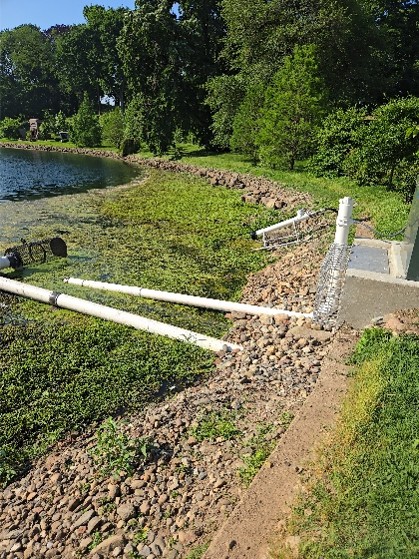
For large commercial facilities, campuses, industrial sites, and data centers, water consumption can represent a substantial operational expense. Capturing and reusing stormwater can reduce dependence on municipal supplies while providing a hedge against future water cost increases. [DEQ VA Stormwater Management Handbook]
In addition, stormwater harvesting can potentially reduce the size of traditional detention infrastructure, creating opportunities to reclaim valuable site area and lower overall project costs when incorporated early in the design process. This concept has become a recurring theme within the rainwater harvesting and decentralized water sectors.
Data Centers Are Accelerating the Conversation
Few industries better illustrate the changing economics of water than data centers.
The growth of cloud computing, artificial intelligence, machine learning, and digital services is creating unprecedented demand for new processing facilities. Many of these facilities require significant water resources for cooling systems. Industry discussions increasingly focus on how alternative water sources, including rainwater and stormwater harvesting, can help offset potable water demand while improving sustainability performance. [nextcity.org]
For developers and operators, stormwater harvesting offers multiple potential benefits:
- Reduced reliance on municipal water supplies
- Enhanced drought resilience
- Improved sustainability metrics
- Greater community acceptance
- Support for corporate water stewardship initiatives
As local governments and utilities evaluate the long-term impact of rapid growth, stormwater reuse is becoming part of a larger conversation about infrastructure planning and water security. [nextcity.org]
A Shift Toward Water Resilience
The broader trend extends beyond any single market sector.
More communities are recognizing that centralized water systems alone may not be sufficient to meet future challenges. Decentralized water solutions, including rainwater harvesting, stormwater capture, and onsite water reuse systems, are increasingly viewed as tools for building resilience while reducing pressure on existing infrastructure.
At the same time, utilities are beginning to evaluate how distributed water supplies can complement regional infrastructure investments. Instead of viewing alternative water systems as niche sustainability features, planners are increasingly considering how they contribute to overall water reliability and resource diversification. [epa.gov]
Looking Ahead
The future of stormwater management will likely look very different from the past.
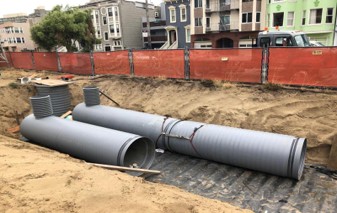
The industry is moving beyond a compliance-only mindset toward a model that recognizes water as a valuable resource. As funding opportunities expand, water costs rise, and sustainability expectations increase, stormwater harvesting is positioned to play a larger role in project development and water infrastructure planning. [epa.gov], [deq.virginia.gov], [scsengineers.com]
For owners, developers, and municipalities, the question is no longer simply how to manage stormwater. The new question is how to put it to work.
"Stormwater is no longer just something to detain. Increasingly, it is something to value, harvest, and use."
Heather Kinkade
Executive Director, ARCS